Every year, I have a personal marathon to read at least 52 books — one per week. It sounds more complex than what actually is, because that’s about 35 minutes of daily reading. It doesn’t look like much if you break the monster of ~15,000 pages to read.
Once I realized that half an hour of the 17 hours I’m usually awake isn’t a painful act, I developed a thirst for reading. It didn’t happen in the first year, nor in the second, but it gained traction, and now I can surpass that number easily if I just put in a little effort. However, the number is allowed to go down if there are more dense books, like The Brothers Karamazov. Nevertheless, this year I got soft on the style of reading, avoiding intense texts in sequence. Therefore, reaching the number 52 wasn’t such a struggle.
Without further ado, here are my top 10 books of 2025 (without a particular order):
- The City of God (Part I), Augustine of Hippo
- The Blue Book, Ludwig Wittgenstein
- Same as Ever, Morgan Housel
- The Culture Matters, Roger Scruton
- Room for Good Things to Run Wild, Josh Nadeau
- The Concept of Anxiety, Søren Kierkegaard
- The Idea of Holy, Rudolf Otto
- The Righteous Mind, Jonathan Haidt
- Practicing the Way, John Mark Comer
- Inteligência Humilhada, Jonas Madureira.
This doesn’t mean I think all of them are timeless (even though some are), but they touched me in a way that shaped my character — and that’s what books are all about. Unless the book is your living manual, you don’t need to memorize every line; the goal is to understand the book’s central concept and see how the core ideal can be applied (or avoided). For example, this year I read two books by Nietzsche, yet even though I find them very insightful, I use them as a model of how my mind should not be shaped. Therefore, reading should be thoughtful and careful, because you’re consuming ideas that shape actions, and actions have consequences.
This year was quite introspective, focusing on the interior rather than the exterior (productivity). That means next year will likely have an outward perspective, as the seeds planted need to bear fruit.
De civitate Dei contra paganos
Augustine of Hippo
*****

This is a masterpiece by one of the most significant figures in the foundation of Christianity during the early years of the Church. Augustine’s “Confessions” already brought me to my knees as he reflects on how his vast knowledge wasn’t enough to comprehend how desperately he needed God. The book addresses several aspects of our lives. Now, while reading “The City of God,” Augustine expands the perspective to illustrate how hollow our society was. Even though they achieved many things, people were often blind to the most essential aspects of life.
“Two cities have been formed by two loves: the earthly by the love of self, even to the contempt of God; the heavenly by the love of God, even to the contempt of self.”
The version I have splits the book into two parts, and in the first, he dissects the basis of the Roman society. Part I is primarily a demolition project: Augustine systematically dismantles Roman religion, showing that the gods never protected Rome and that Roman virtue was invariably compromised by pride. The deeper argument: earthly cities rise and fall because they’re built on disordered loves. The City of Man seeks glory, power, and domination. The City of God seeks God himself.
Augustine reminds us that we are here as pilgrims, and no city will ever be our real home.
The Blue Book
Ludwig Wittgenstein
****
What stands out to me in this book is the influence of Wittgenstein’s philosophy on the development of artificial intelligence. Although his ideas were not directly used, they significantly shaped our understanding of language and the construction of thought, which form the foundation of AI.
Wittgenstein argues that meaning comes from use. We become confused by grammar, which leads us to ask malformed questions like “What is time?” and “What is knowledge?” This confusion leads to the construction of elaborate metaphysical answers to problems that are actually misunderstandings of language. Philosophy doesn’t solve problems; instead, it dissolves them by revealing how language has misled us.
The process can be dense, recursive, and often frustrating, but once you understand it, you stop asking specific questions entirely. It goes back entirely to the core of philosophy, as formulating the right questions is better than just providing answers. This is how we get the best results from AI, and it’s also how we can improve everything we think and do.
“Our craving for generality has another main source: our preoccupation with the method of science… Philosophers constantly see the method of science before their eyes, and are irresistibly tempted to ask and answer questions in the way science does. This tendency is the real source of metaphysics, and leads the philosopher into complete darkness.”
Same as Ever
Morgan Housel
****
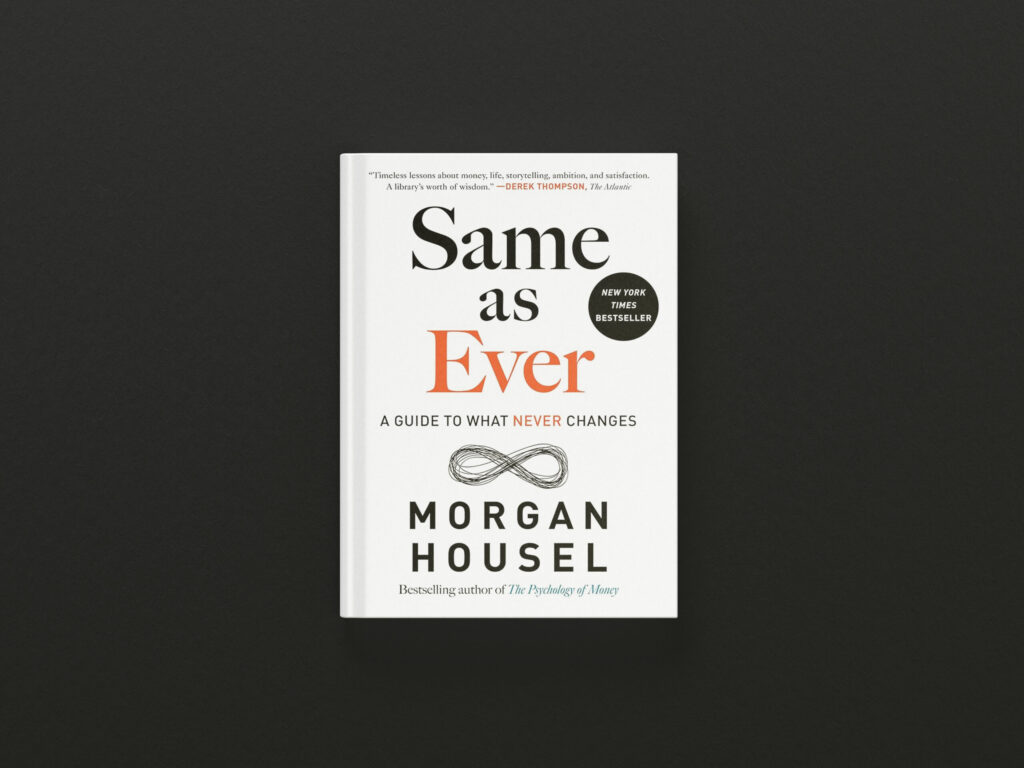
Following the success of “The Psychology of Money,” Morgan Housel began to release more intriguing works, including his latest book, “The Art of Spending Money,” which I also read this year. However, I preferred “Same as Ever” because it explores a range of topics. In contrast, “The Art of Spending Money” feels more like an appendix to “The Psychology of Money.” His writing style is comfortable for most people and reduces complex issues into palatable words.
For those familiar with Nassim Taleb’s work, this book will find a home, as Housel talks about how people obsess over predicting what will change, but the real edge comes from understanding what never changes — greed, fear, envy, tribalism, the need for narrative, the gap between expectations and reality.
“The more history I read, the more comfortable I became with the future. When you focus on what never changes, you stop trying to predict uncertain events and spend more time understanding timeless behavior.”
Even though it’s a pop hit, the book delivers important content that makes one wonder how to go deeper into the subjects. The core idea is that the world changes; people don’t. Plan for permanent features of human behavior, not temporary conditions. This book is a nice parallel to Will Durant’s The Lessons of History, as both arrive at the same conclusion.
Culture Counts
Roger Scruton
****

“The purpose of education in the humanities should not be to benefit the student with a set of instrumental skills, but rather to look after the culture itself by training a fresh set of guardians to look after it.”
Scruton argues that culture isn’t just a form of decoration, but rather the operating system of a civilization. High culture transmits meaning across generations, cultivates emotional intelligence, and provides the shared symbols through which a society understands itself. Modern progressivism, he contends (and also finds resonance with my own perception), has systematically dismantled this inheritance: attacking tradition as oppression, replacing judgment with relativism, and substituting political messaging for genuine art. The result is a cultural vacuum filled by commercialism and ideology. Scruton isn’t merely nostalgic; he’s making a functional argument. Without high culture, people lack the resources to navigate suffering, beauty, and moral complexity. The loss isn’t only aesthetic; it’s existential. That reflects how anxiety, depression, and all sorts of mental disorders are trending.
Even though Scruton has a different perspective from Adorno or Lipovetsky, they both agree that the mainstream butchered culture in order to profit, but differently from the Frankfurt School, Roger points out that not just the market profits from the degradation of culture, but also the gatekeepers in academia and the “so-called” elite.
Culture is how a civilization teaches its members to feel the right things about the right objects. Destroy it, and you produce people who can’t perceive meaning.
Room for Good Things to Run Wild
Josh Nadeau
****
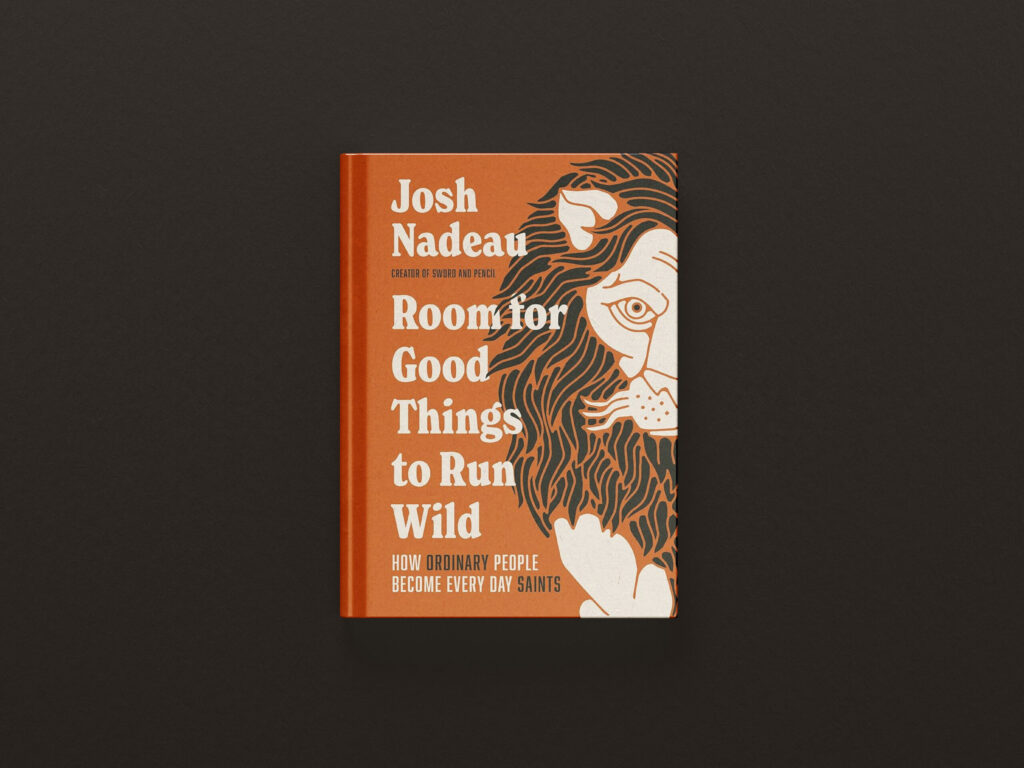
Well known in the Instagramsphere, Josh debuted with this book, which takes its title from a G. K. Chesterton work, as Christianity establishes order so that good things can flourish freely within it. The book can be interpreted as a contemporary Confessions, but not in the sense of a mundane character achieving enlightenment; instead, it depicts a Christian awakening to true Christianity.
Nadeau draws heavily on Chesterton, Lewis, and Dostoevsky— a curated tradition of writers who saw glory in the mundane. The book includes original illustrations and a “liturgy” that builds chapter by chapter. It’s more poetry than system, more invitation than instruction.
“I’m on the same path as you, still learning the hard way. But there has been a real change in me. I tasted a bit of the flavor of Death, and I also tasted some of the Life to come, and I know which I prefer.”
Begrebet Angest
Søren Kierkegaard
*****

Kierkegaard is a fascinating person. His perspectives on philosophical and Christian subjects are unique. I consider him one of the most important authors to read for how he twists the way problems of life are perceived.
Anxiety isn’t fear (which has an object) — it’s the dizziness of freedom, the vertigo we feel before infinite possibility. Anyone reading this book will relate to this conclusion. Anxiety reveals our freedom to us; it’s the mood of a self that must become itself through choice. But the core insight lands: anxiety is not a malfunction. It’s the price of being a self capable of becoming something — or nothing.
“Anxiety is freedom’s possibility; this anxiety alone is, through faith, absolutely formative, since it consumes all finite ends, discovers all their deceptions.”
Das Heilige
Rudolf Otto
*****
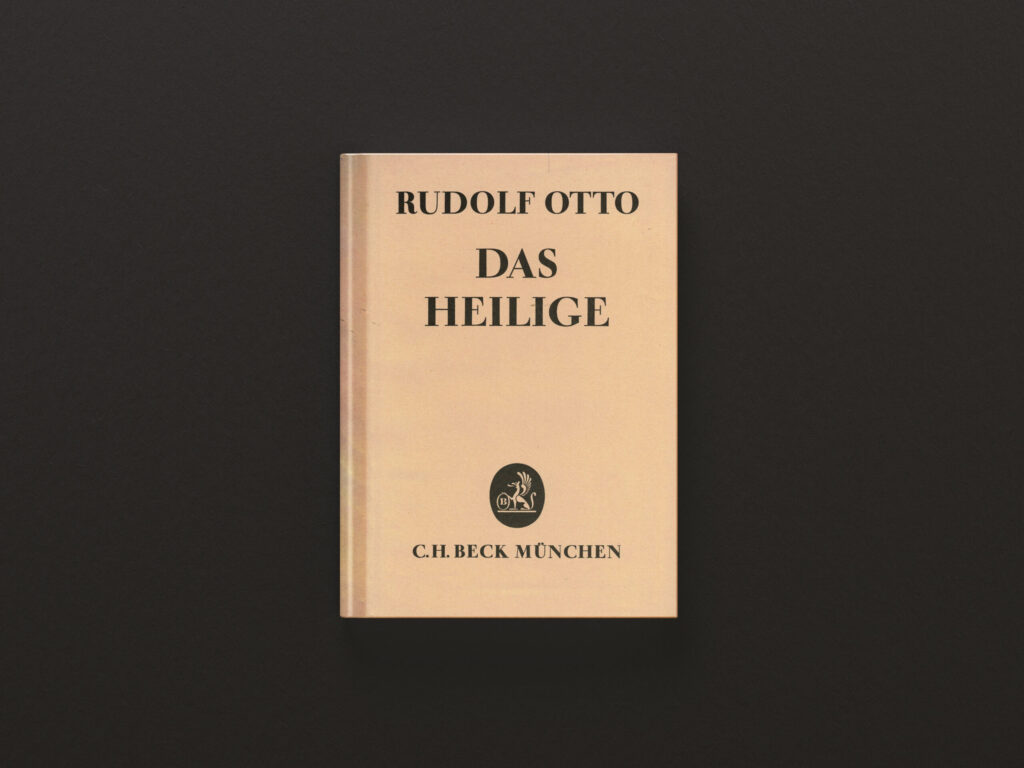
Das Heilige, or The Idea of the Holy, was an essential book for introducing the concept of the numinous. C. S. Lewis rarely named other authors in his books, but Otto was one of them because this concept is unforgettable. Numinous means a felt encounter with the holy—mysterious, awe‑filled, and otherworldly. It is less an idea than an event in consciousness: the soul sensing it stands before something real, alive, and greater than itself.
I consider this concept to be an upgraded version of Kant’s sublime. Otto’s numinous is a felt encounter with the “wholly other”—a personal, irreducibly religious presence that evokes awe, dread, and attraction. It is relational and theistic in flavor: one senses being addressed, judged, or invited. Kant’s sublime is an aesthetic-judgment experience before nature’s vastness or force (a starry sky, storms), where imagination fails to grasp the magnitude, and reason asserts moral freedom. It is impersonal and reflective: the mind discovers its supersensible vocation, not a divine presence.
“In contrast to ‘the overpowering’ of which we are conscious as an object over against the self, there is the feeling of one’s own submergence, of being but ‘dust and ashes’ and nothingness. And this forms the numinous raw feeling for the feeling of religious humility.”
The book also draws on the history of how mankind relates to the sacred, and how that shaped humanity since the early days. The book isn’t just theological; it also takes a sociological perspective.
The Righteous Mind
Jonathan Haidt
****
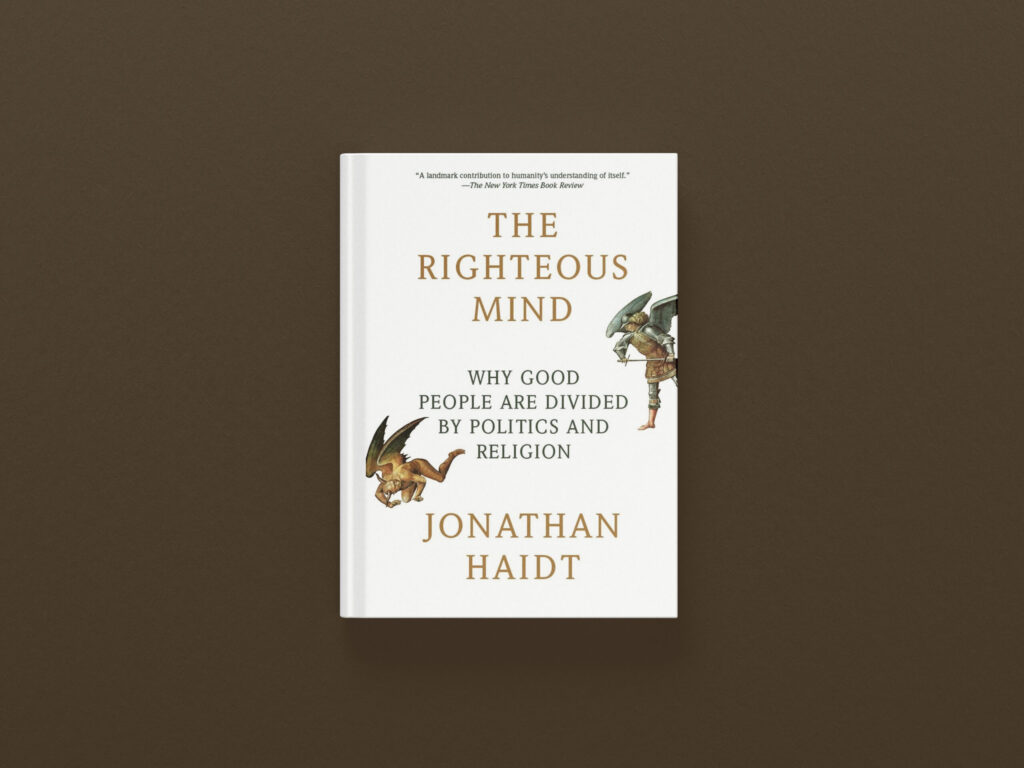
Jonathan Haidt’s name is spreading all around these days because his book “The Anxious Generation” was a tremendous bestseller, with good reason: it hits a nerve in our society and the future of our generation. Even though I think Michel Desmourget’s work should’ve gained more attention, it had the same subject and was written years before. Nevertheless, Haidt already had a stronger name, primarily because of “The Righteous Mind.” Therefore, I decided to read it too.
This book tries to conceal both political spectrums, or at least make one side more empathetic toward the other. He points out that neither side is entirely irrational, as they’re attending to different moral dimensions. The book explains why political opponents talk past each other — they’re not disagreeing about facts but perceiving through different moral matrices.
“Empathy is an antidote to righteousness, although it’s very difficult to empathize across a moral divide.”
I don’t agree with all of Haidt’s arguments, and surely some are a bit shallow in how he sees that this might resume as a sense of community and meaning. The strongest argument against his religious point of view is that he completely misses conversion. When people convert, they aren’t precisely seeking safety or communion, as many of them face quite the opposite of that: persecution and hatred. However, the book offers strong explanations of why we tend to increase tension through different perspectives, which, in itself, is already a triumph of his writing.
“Morality binds and blinds. It binds us into ideological teams that fight each other as though the fate of the world depended on our side winning each battle. It blinds us to the fact that each team is composed of good people who have something important to say.”
Practicing the Way
John Mark Comer
***
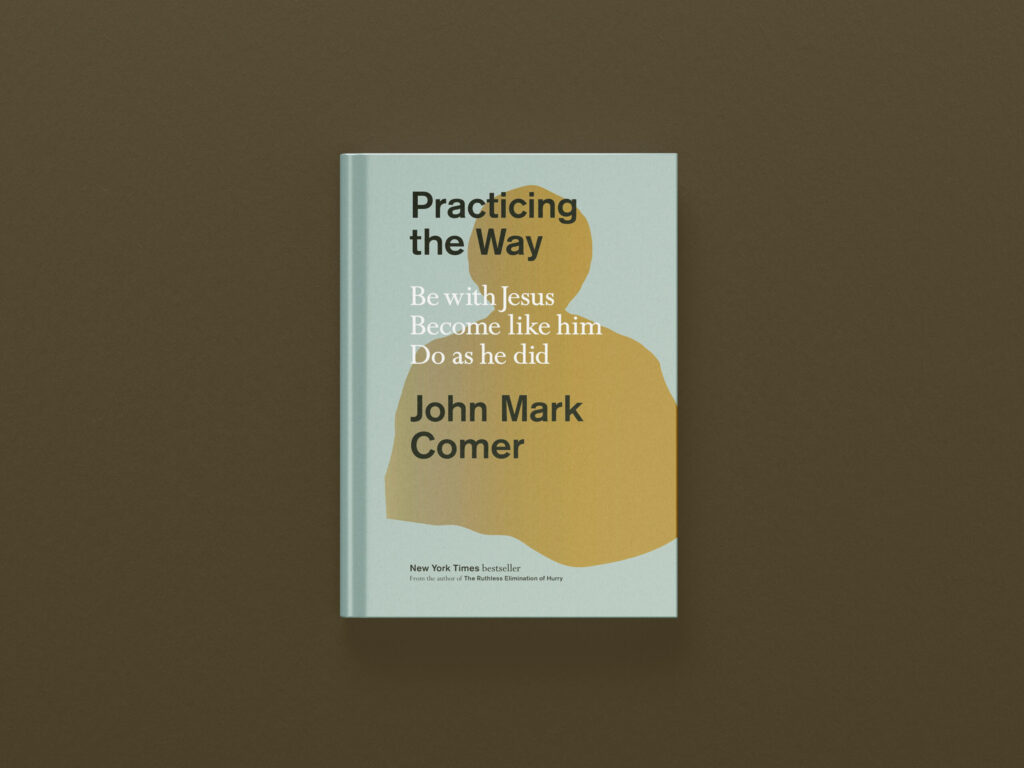
Pastor John Mark Comer has a very contemporary writing style that almost feels like you’re reading a conversation or even a social media post — his target is the young folks. Even though the style is not to my taste, John’s approach towards the content and importance of setting the proper standards for becoming a faithful follower of Jesus.
The “Way” is apprenticeship to Jesus — not just belief in doctrines but imitation of a life. Comer focuses on spiritual disciplines: silence, solitude, sabbath, simplicity, and community. The argument isn’t moralistic (“do these to be a better person”) but formational (“these are how you become the kind of person who naturally does good”).
“Anyone who values truth should stop worshipping reason.”
The book is a sequel to The Ruthless Elimination of Hurry (which I also read this year), and it’s clearly a mature version of the previous book.
Inteligência Humilhada
Jonas Madureira
****
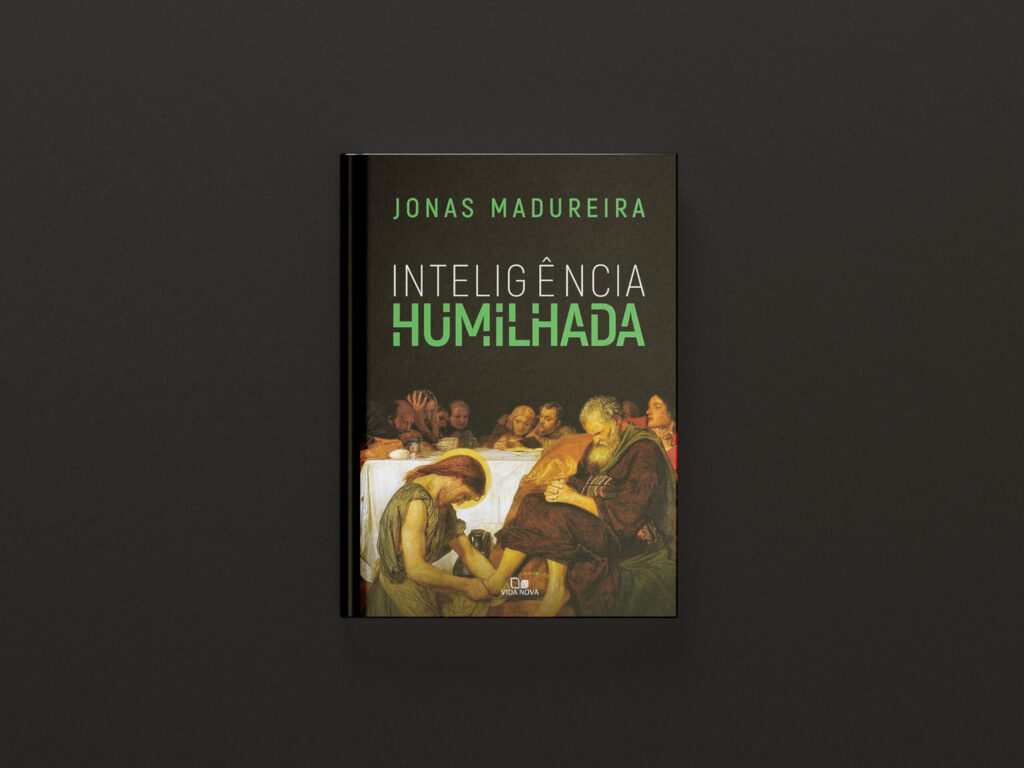
Now, something off the radar for most people, as Jonas is a niche writer in the Brazilian theological scene. However, his understanding of philosophy and theology is blended here in a masterful way. The book should be translated into English for a broader audience.
Madureira argues that modern intellectual life suffers from pride disguised as sophistication. True intelligence requires humility before God, tradition, and the limits of human reason. He draws on Augustine, Calvin, and the Reformed tradition to show that the fall didn’t just corrupt the will but also the intellect.
The book critiques both secular rationalism and evangelical anti-intellectualism, arguing for a third way: rigorous thinking that knows its place. The call is for chastened reason — rigorous thinking that knows its place, submitted to revelation and aware of its own distortions. What hit me in this book is how, after millennia of reasoning, we still haven’t scratched the surface of wisdom.
“True wisdom begins when reason kneels.”
The whole reading list is the following, in reverse chronological order:
1. The Ruthless Elimination of Hurry – John Mark Comer
2. A arte de gastar dinheiro – Morgan Housel
3. A World Without Email – Cal Newport
4. Four Thousand Weeks – Oliver Burkeman
5. A mente moralista – Jonathan Haidt
6. Christ and Culture – H. Richard Niebuhr
7. Como tudo começou – Adauto Lourenço
8. Por que ler os clássicos – Italo Calvino
9. Creativity: A Short and Cheerful Guide – John Cleese
10. O Sagrado – Rudolf Otto
11. On Jiu Jitsu – Chris Matakas
12. A Fazenda dos Animais – George Orwell
13. A Morte de Ivan Ilitch e Outras Histórias – Leo Tolstoy
14. From Strength to Strength – Arthur C. Brooks
15. O Anticristo – Friedrich Nietzsche
16. O Processo – Franz Kafka
17. Ogilvy on Advertising – David Ogilvy
18. Ecce Homo – Friedrich Nietzsche
19. Estética: Textos Seletos – Georg Wilhelm Friedrich Hegel
20. Ferrari: O homem por trás das máquinas – Brock Yates
21. O Conceito de Angústia – Søren Kierkegaard
22. Inteligência humilhada – Jonas Madureira
23. The One Thing – Gary Keller
24. Why Nations Fail – Daron Acemoğlu
25. The Lessons of History – Will Durant
26. Aesthetics – Theodor W. Adorno
27. Ask Pastor John – Tony Reinke
28. A Educação das Crianças – Michel de Montaigne
29. The Paradox of Choice – Barry Schwartz
30. Supercommunicators – Charles Duhigg
31. The Anxious Generation – Jonathan Haidt
32. Skin in the Game – Nassim Nicholas Taleb
33. Room for Good Things to Run Wild – Josh Nadeau
34. Poor Charlie’s Almanack – Charles T. Munger
35. A Conexão de Leipzig – Paolo Lionni
36. Practicing the Way – John Mark Comer
37. Quem educa nossas crianças? – Susan Linn
38. Ética a Nicômaco – Aristóteles
39. A cultura importa – Roger Scruton
40. Lifespan – David A. Sinclair
41. O Livro Azul – Ludwig Wittgenstein
42. A Cidade de Deus: Parte I – Augustine of Hippo
43. Eu, Robô – Isaac Asimov
44. Não Terceirize o Ser Filho – Karen Mortean
45. A Mente Organizada – Daniel J. Levitin
46. Sobre o livre-arbítrio – Augustine of Hippo
47. O Velho e o Mar – Ernest Hemingway
48. The Age of AI and Our Human Future – Henry Kissinger
49. The Comfort Zone – Kristen Butler
50. Same as Ever – Morgan Housel
51. The Case Against Education – Bryan Caplan
52. Onde Existe Amor, Deus Ai Esta – Leo Tolstoy
53. Cartas de um Diabo a Seu Aprendiz – C.S. Lewis